Look at River Oaks sale data from earlier this year and you'll find a contradiction. In March 2026, the median sale price for a River Oaks home was $2.1 million, down 6.6% from the year before. In that same stretch, the median price per square foot climbed to $632, up 22.2% year over year. A market cannot get cheaper and more expensive at the same time. Unless the thing being measured has quietly changed.
That's what happened. River Oaks isn't one market. It's two markets wearing the same zip code, and the mix between them shifted. One market sells houses. The other sells land that happens to have a house sitting on it, waiting to be removed.
What's Actually For Sale in River Oaks
Roughly a quarter of recent River Oaks sales have been tear-down and rebuild transactions, and that share is enough to bend the neighborhood's headline numbers. An acre-plus lot inside the deed restrictions can carry $4 million to $7 million in land value alone before anyone breaks ground on a house. Tear-downs commonly trade for $3 million or more, priced not against the structure standing on the lot but against what a builder can put there instead.
That math played out in public view this year, when a buyer paid $15.5 million for a River Oaks mansion with no intention of living in it. The plan is to remove the 15,000-square-foot house, salvage roughly $4 million in reusable materials for donation to Habitat for Humanity, and merge the parcel with an adjacent lot to build a pool house and garden across a combined two-acre compound. The house was never the point. The land, and what it could become once combined with the lot next door, was.
Once you see the pattern, the pricing map makes more sense:
| Area | Typical Range |
|---|---|
| The boulevard (Westheimer to Buffalo Bayou) | Historic John Staub-designed estates, top of the price ladder |
| Lazy Lane, Inwood, Del Monte | $8 million to $25 million |
| Section Two, west of Willowick | $2 million to $6 million for renovated historic homes |
| Acre-plus lots, land value alone | $4 million to $7 million before construction |
| Common tear-down trade price | $3 million and up |
A falling median price doesn't mean River Oaks got more affordable. It can mean the mix of what traded that month leaned smaller, or leaned toward land-only deals that skip the house-size math entirely. The price per square foot is the number that stays honest when the mix shifts underneath it.
The Real Approval Process Isn't at the County
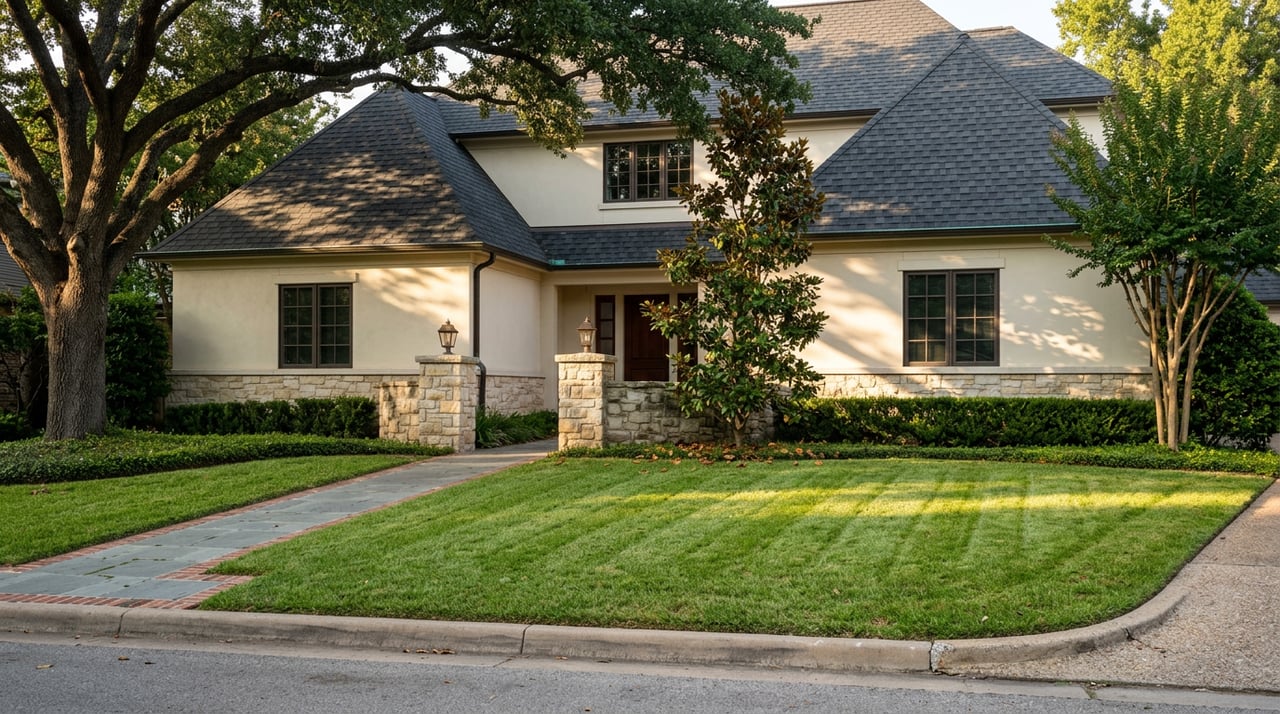
Houston has no citywide zoning code, which means the rules that actually govern what gets built in River Oaks come from a private association, not a city permit office. River Oaks Property Owners, known as ROPO, enforces deed restrictions dating to the 1920s that cover setbacks, height, exterior materials, and tree preservation. That last one explains something you notice on your first drive down the boulevard: the mature oak canopy has survived a century of teardown and rebuild cycles because ROPO's review process makes removing a significant tree a decision, not a default.
ROPO reviews plans for new construction and for substantial renovations, which surprises buyers coming from cities where a homeowners association handles paint colors and little else. In River Oaks, the association's sign-off sits between your architect's drawings and your builder's permit.
The county records the deed. ROPO decides what you're allowed to put on the land.
What This Changes About How You Write the Offer
A land-value purchase behaves differently at every stage of a transaction. Inspection contingencies are often waived, because the buyer has no interest in the condition of a house scheduled for removal. Cash offers are common at the top of the market, and public MLS listings represent only part of what's actually trading. Agents who work the neighborhood full time report that the most significant sales happen off-market, through relationships rather than open listings.
The closing itself can move fast, often 30 to 60 days for a land-value deal. What takes time is everything after closing. Plan on an 18 to 24 month construction timeline once permits are issued, and build the ROPO review process into your schedule from day one rather than treating it as a formality. Out-of-town buyers accustomed to looser jurisdictions consistently underestimate how much these rules shape a project's cost and calendar.
Ownership costs matter here too. Property taxes in River Oaks run roughly 2.3% to 2.4% of assessed value, which puts a $5 million home at roughly $115,000 to $120,000 a year. Appraisal protests against the Harris County Appraisal District are less an occasional tactic than a routine part of owning here.
If You Want the Address Without the Rebuild Math
Not every buyer drawn to River Oaks wants to manage an 18-month construction timeline or negotiate around a tree preservation clause. For buyers who want the walkability, the retail, and the address without taking on a rebuild, the River Oaks District and the adjacent Upper Kirby corridor offer condos and townhomes typically priced from $800,000 to $3 million and up. Buildings like 2727 Kirby and The Sophie at Bayou Bend sit inside that range, offering elevator access, concierge service, and proximity to the same restaurants and shopping without the acre of deed-restricted land underneath.
The corridor's momentum is showing up in new construction too. In April 2026, Southern Land Co. broke ground on Lily River Oaks, a 38-story tower in Upper Kirby that will bring 331 apartments and 18 penthouses to a submarket where new high-rise construction has been unusually thin. It's a rental project, not a for-sale condo building, but it signals that institutional capital still sees long-term demand for vertical living within reach of River Oaks, even while the single-family side of the neighborhood stays gripped by land scarcity and tight inventory.
That's the trade every buyer in this corridor eventually makes. Estate living inside the deed restrictions means owning the land, the rules, and the timeline that comes with both. Vertical living nearby means buying into the address and the lifestyle while someone else manages the roof, the HVAC, and the tree preservation paperwork.
A Few Questions Worth Asking Before You Write an Offer
Does a land-value listing price include the existing house? Usually yes, in the sense that the house is still standing and sometimes still livable or leasable, but the price is set against the lot rather than the structure. Some sellers offer the option to lease the existing home, hold it while you plan construction, or move ahead with demolition immediately. Read the listing language carefully. "Priced at lot value" is a signal about what the seller expects you to do with the house, not a guarantee of its condition.
Do renovations need ROPO approval, or just new construction? Both, in most cases. ROPO's review covers substantial renovations as well as ground-up builds, so a full gut renovation that keeps the existing foundation can still require sign-off before permits are issued. Confirm the scope of review early, since it affects your project timeline as much as new construction does.
River Oaks rewards buyers who understand which market they're actually in before they make an offer. Whether that means budgeting two years for a rebuild on Lazy Lane or choosing a turnkey residence in the River Oaks District instead, the right first step is a conversation with someone who works both sides of that line. Nicole Calderon advises buyers and developers across Houston's vertical and estate markets alike. Schedule a private consultation to talk through what your budget actually buys in River Oaks today.