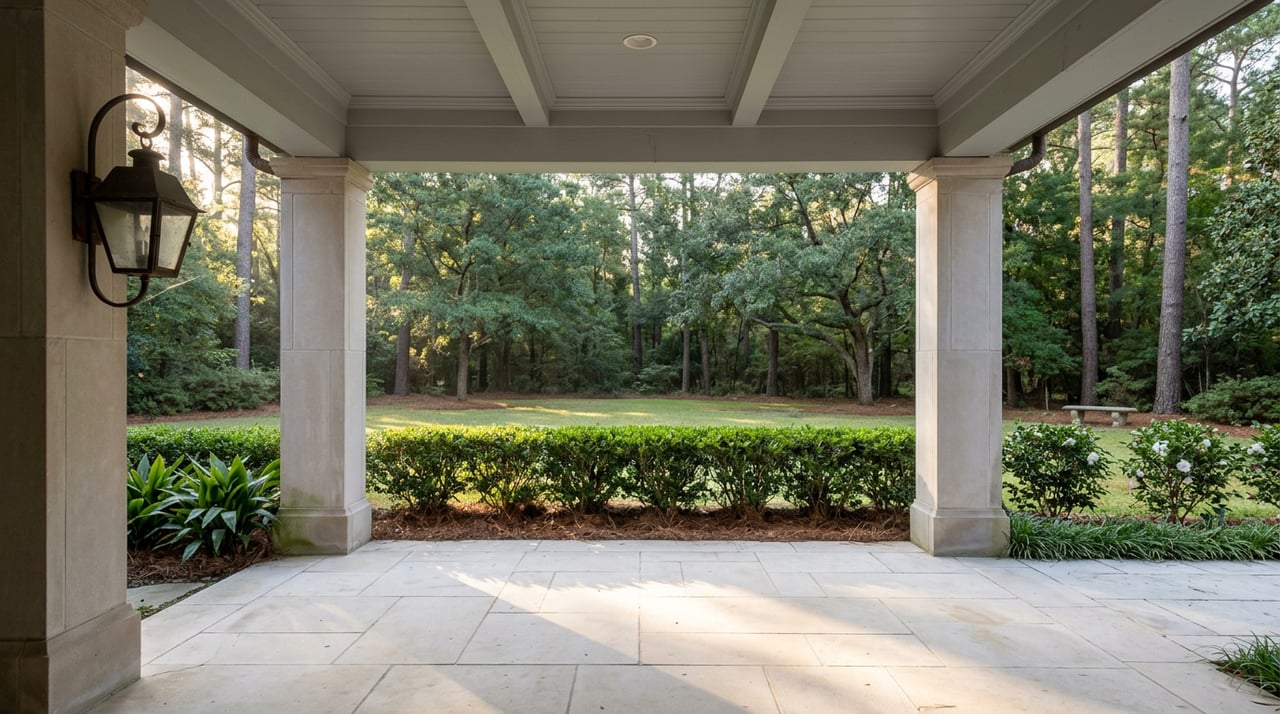
August in Memorial Park sounds different than March. No leaderboard app buzzing in 15,000 pockets a day. No shuttle idling off Memorial Drive, no credentialed entrance lines at the gates. Just cicadas, a jogger's shoes on crushed granite, and a Saturday morning that belongs to whoever shows up early enough to beat the heat.
That contrast is part of the park's annual rhythm. Twice a year, Memorial Park draws thousands of people for marquee events. The rest of the year, it continues to serve people who use the park regularly. Between this year's marquee golf tournament and this fall's marquee art festival, the park's day-to-day uses and longer-term projects continue outside the major-event spotlight.
The Houston Open's four days at the park
In late March, the Texas Children's Houston Open took over Memorial Park Golf Course for four days, and the Conservancy projected roughly 15,000 visitors a day moving through the grounds. Every parking lot in the park closed to the public, and street parking was restricted. Entry off Memorial Drive required a credential or permit. The Conservancy advised regular park users to walk, bike, take METRO, or visit another of the 366 parks the city maintains during the week.
Gary Woodland won that tournament at 21-under par, a scoring margin that reads as a fairly calm week by this course's standards. The tournament's own retrospective on its Memorial Park era points out that the winning score has swung by as much as ten strokes between years depending on how hard the March wind decides to blow off the bayou. A 21-under week means the course played generous. A ten-shot swing in the other direction means it didn't. For four days, the tournament brought a television audience and 135 golfers to Memorial Park, while ordinary access to the park was limited.
That's the spectacle side of the calendar. Now here's the six months in between.
The August 8 community run
For Saturday, August 8, the Houston Area Road Runners Association had scheduled Houston Party in the Park on the grass just west of the Tennis Center, from 7 to 10 in the morning. The event listing describes a no-entry-fee event, with watermelon, Gatorade, a live DJ, and a loose morning run schedule for whoever wanted to show up and move. HARRA doesn't profit from it. Tent space fees cover Memorial Park's own event costs, and that's about as far as the commercial ambition goes.
The tournament draws roughly 15,000 visitors a day and brings temporary parking and entry restrictions; the community run was scheduled as a free gathering that required no credential.
The golf tournament also funds park maintenance and charitable work across the city. The two events illustrate different kinds of park use: the tournament is a large event, while the community run was scheduled as a smaller, no-cost gathering.
The groundbreaking almost nobody has seen yet
The bigger news this year isn't an event at all. It's construction that's about to start and hasn't generated much local buzz.
In April 2025, the Memorial Park Conservancy unveiled Memorial Groves, a project meant to finally give the park's World War I history the physical space it was always supposed to have. The land was Camp Logan before it was Memorial Park, a training ground where more than 70,000 soldiers passed through before deployment overseas, and the new project is designed to honor that history while adding recreational space and parking for everyday park users. The Kinder Foundation has put an additional $10 million toward the $50.5 million project, and construction is slated to begin sometime this year, with completion targeted for late 2027.
That same source notes a second, smaller piece of news that hasn't circulated much beyond one CultureMap writeup in January: a new playground and visitor's center are also on the way, expected to open in 2027. Neither project has broken ground in any visible way yet. There's no fencing up, no equipment staged, nothing a weekend visitor would notice walking the Land Bridge today. But the funding is committed and the clock has started, which means the next eighteen months are the last stretch where this corner of the park looks the way it's looked for years.
What the prairie looks like when nobody's chasing wildflowers
The Kinder Land Bridge and the Cyvia and Melvyn Wolff Prairie opened in February 2023, restoring 50 acres of native Gulf Coast prairie over what used to be a stretch of Memorial Drive. It's the largest piece of restored coastal prairie in any American city park, planted with little bluestem, Indiangrass, switchgrass, and enough wildflower seed to draw crowds twice a year. The peak windows are late spring, April through June, and early fall, October through November, when the wildflowers are at their showiest and the mounds fill up with people taking photos of the downtown skyline through native grass.
August isn't that. The prairie in late summer is mostly grass doing what grass does in Texas heat: holding its ground, not performing for anyone. That's not a lesser version of the Land Bridge. It's the version where you can actually hear the wind move through it instead of a crowd.
A few practical notes for anyone using the park this month:
- The Memorial Loop Drive lot on the south side, which serves the Seymour Lieberman trail and the tennis center, fills early on Saturdays even in summer. Weekday mornings are the reliable window.
- The Eastern Glades lot off Memorial Drive near 610 sits closest to Hines Lake and the Live Oak Allee, and it's the better bet if shade is the priority in August.
- The golf course and its lots, closed to the public during the March tournament, have been back to normal municipal operation for months now. If the Houston Open kept you away from a tee time in the spring, that excuse expired in April.
Why the quiet stretch is worth paying attention to
None of this is a reason to buy or sell anything. It's just what the park is actually doing between its two loudest weeks of the year. The Houston Open proved the course can host a PGA Tour field and still let a ten-stroke swing in either direction feel routine. The Bayou City Art Festival, coming October 9 through 11, will draw its own version of a crowd. In between, the park's story includes a $50.5 million project that hasn't broken ground yet, a prairie that's resting instead of blooming, and the no-cost community run that was scheduled for August 8.
Knowing that rhythm, not just the headline dates, is what separates someone who follows this park from someone who only hears about it twice a year.
If you're weighing what a home near this stretch of Houston actually means day to day, not just on the two weekends everyone else notices, Nicole Calderon has that context built in. Schedule a private consultation whenever you're ready for the longer conversation.